Equus Refractus
The Refracted Horse
A series of six mixed-media drawings on cotton paper.
Project Summary
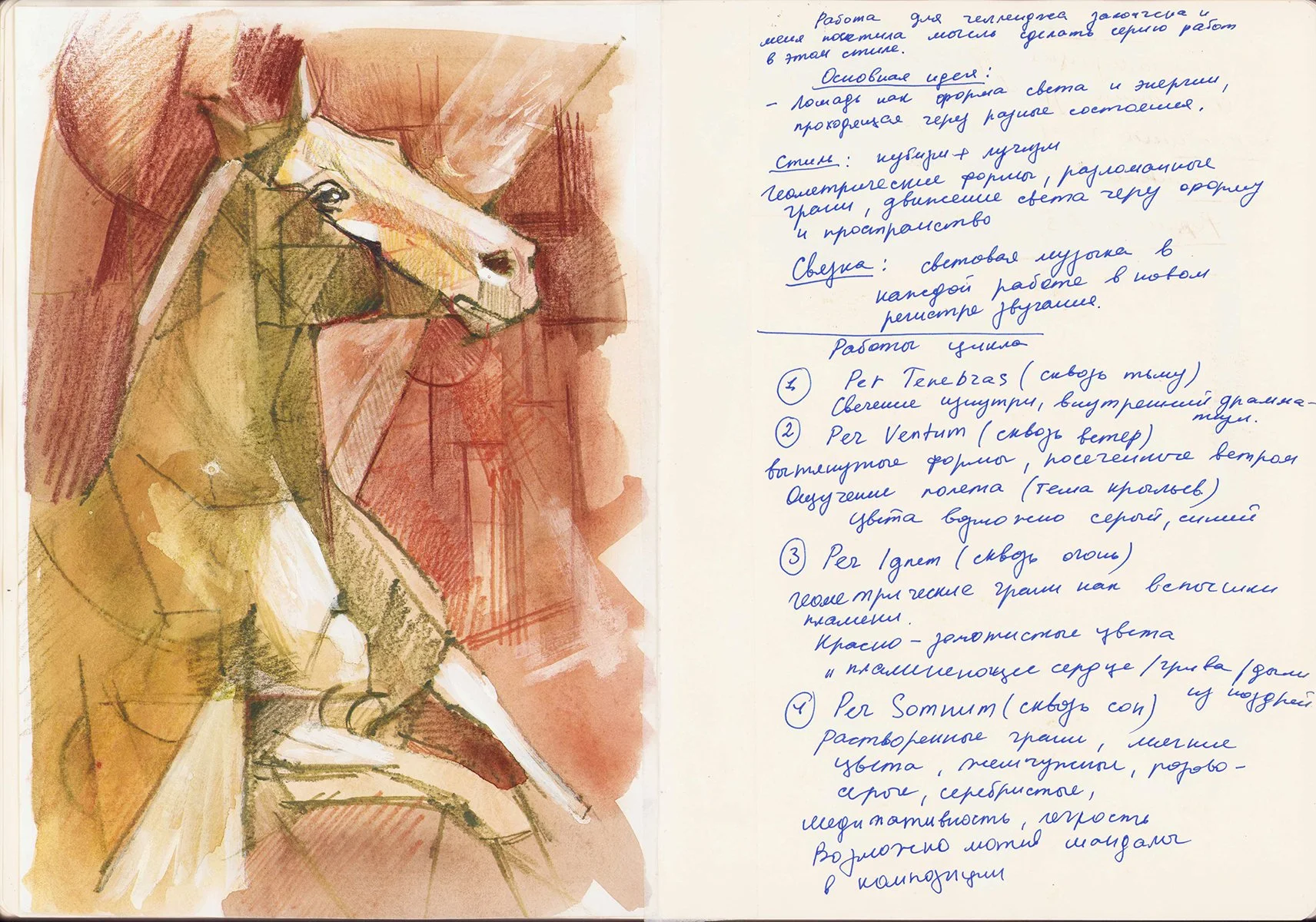
Equus Refractus explores refraction as a moment of transformation. At the centre of the project is the horse — not only as an animal, but as an image of freedom, movement and inner force. In each work, this living force encounters resistance: matter, pressure and the influence of different elemental forces.
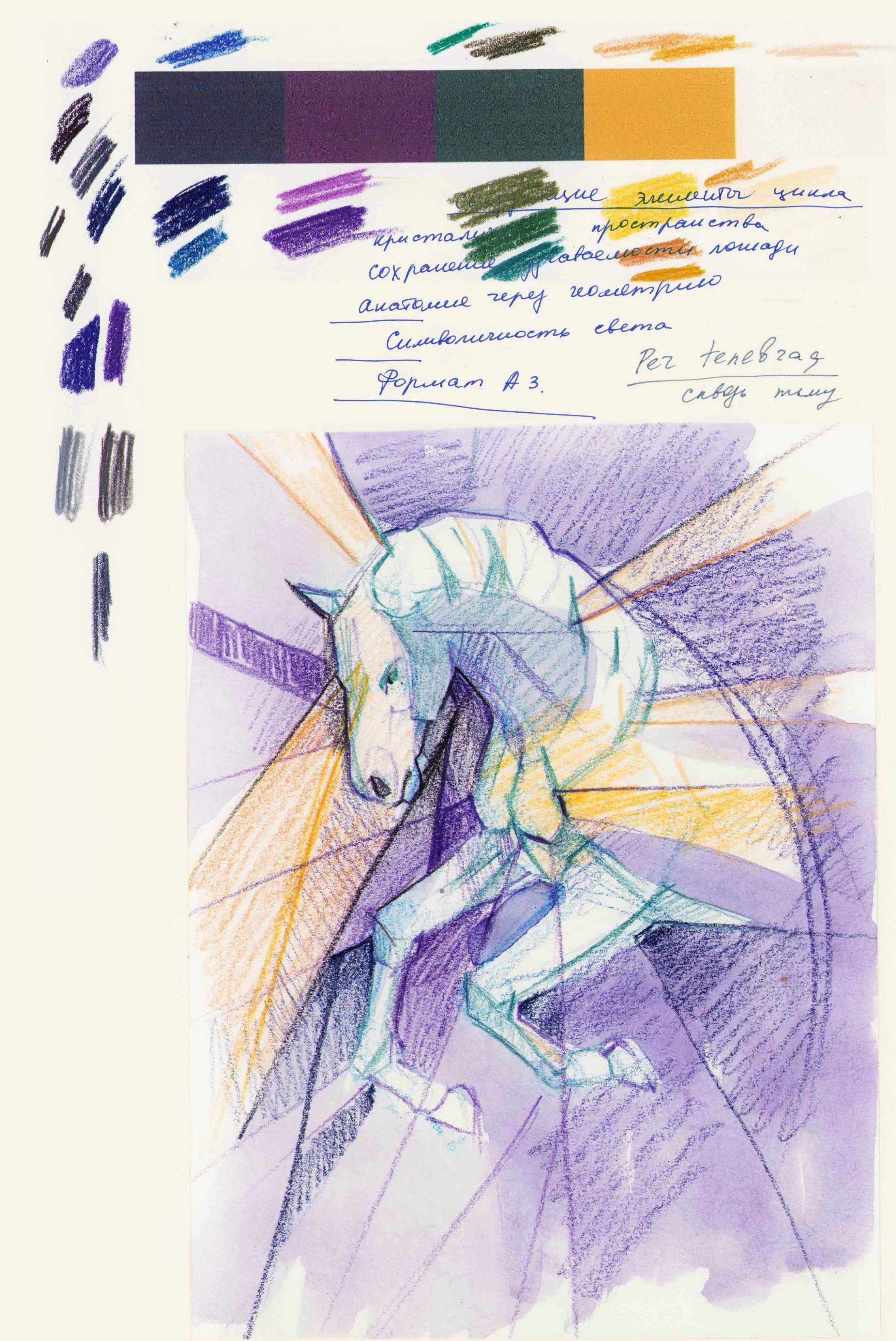
Light plays a central role in the series. It is both an organising structure and an active environment. It shapes the image, reveals the fracture and makes the moment of transformation visible. The horse remains recognisable, but its form is bent, interrupted, opened or partially dissolved.
The six works are organised through three elemental pairs: light and darkness, fire and ice, wind and sleep. These elements are both physical and metaphorical. They act upon the horse and reveal different qualities that appear, disappear or change in the process of transformation.
Structure of the Series
he series is organised through three elemental pairs:
Light / Darkness
Per Lumen — through light
Per Tenebras — through darkness
Fire / Ice
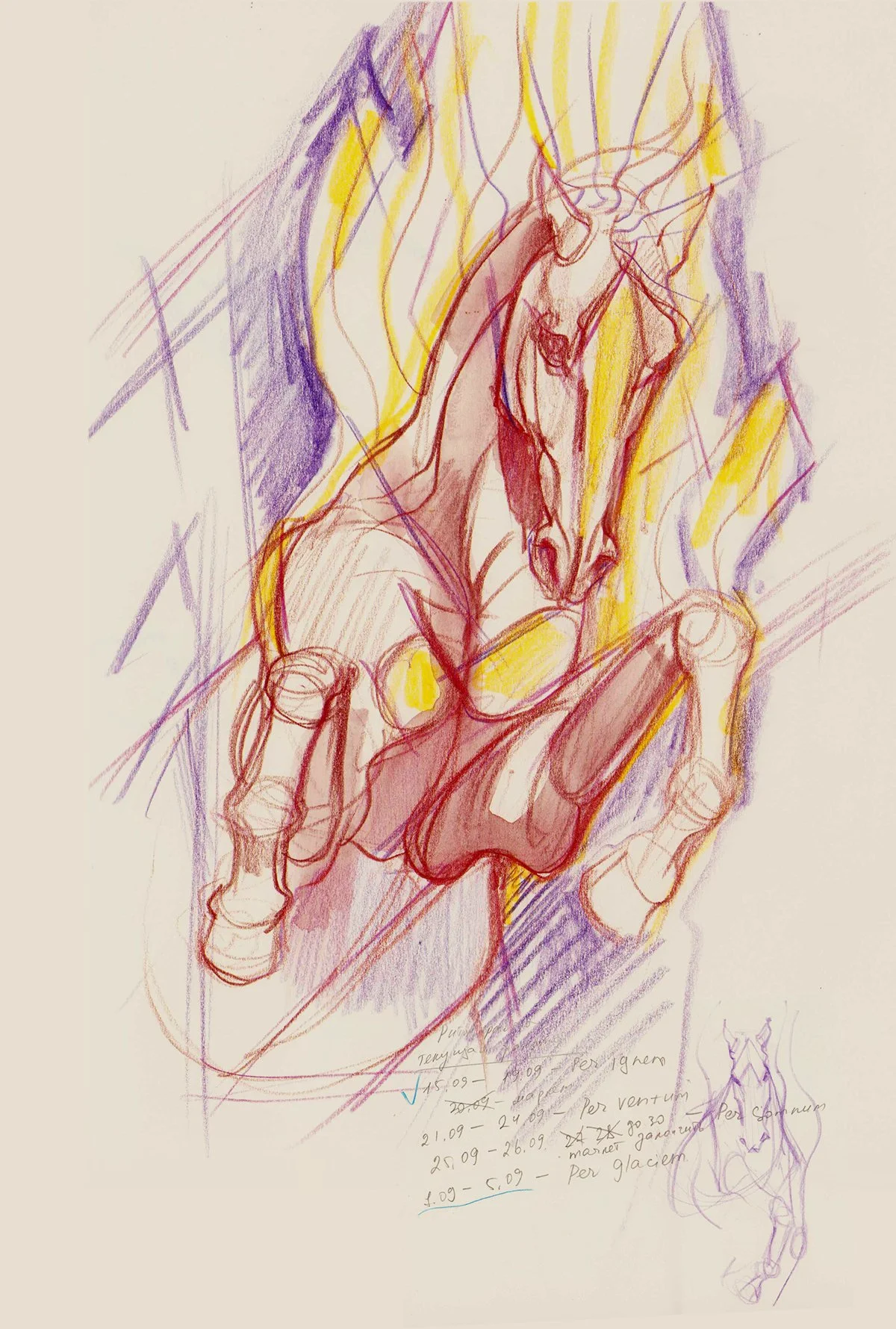
Per Ignem — through fire
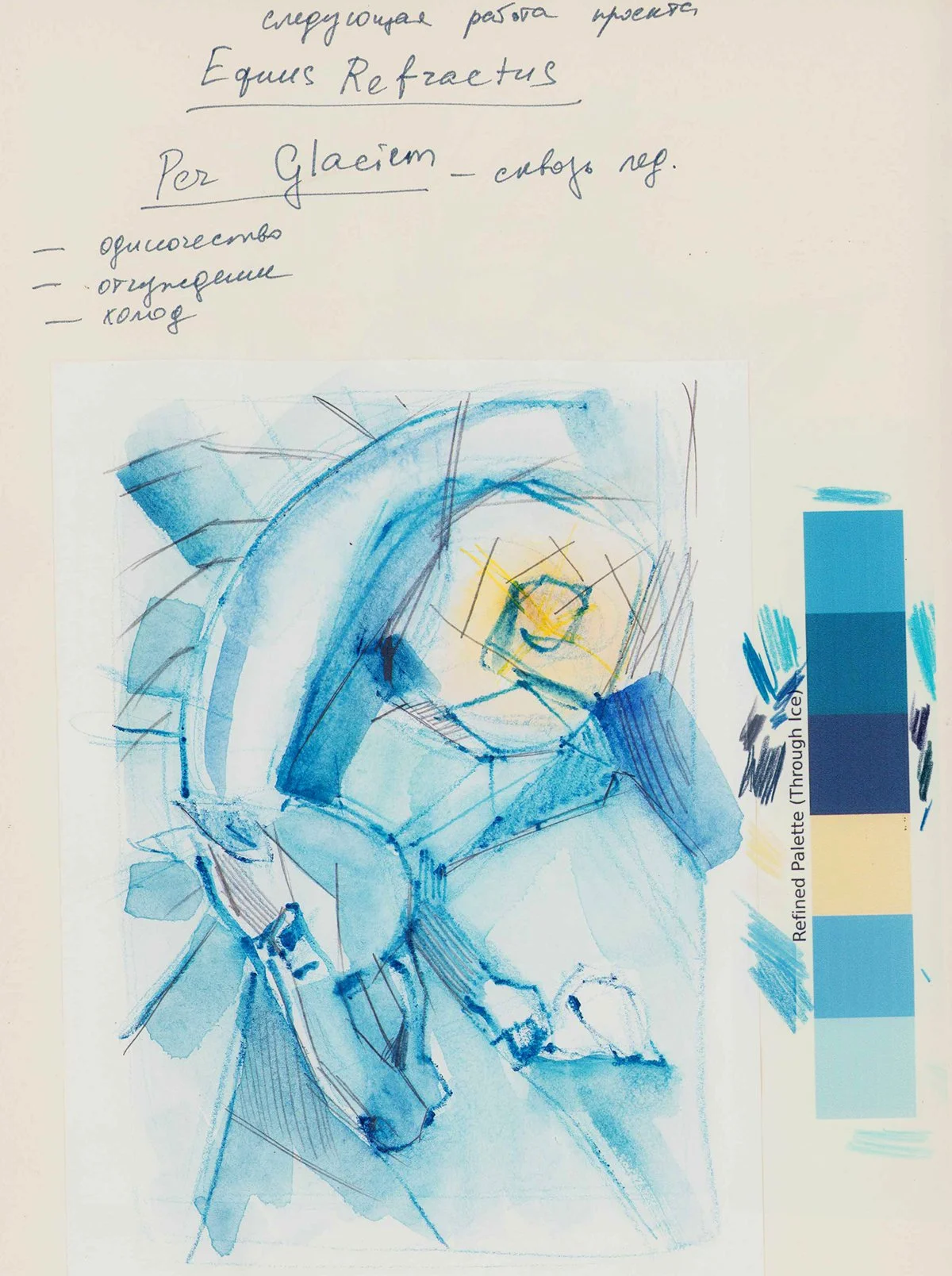
Per Glaciem — through ice
Wind / Sleep
Per Ventum — through wind
Per Somnum — through sleep
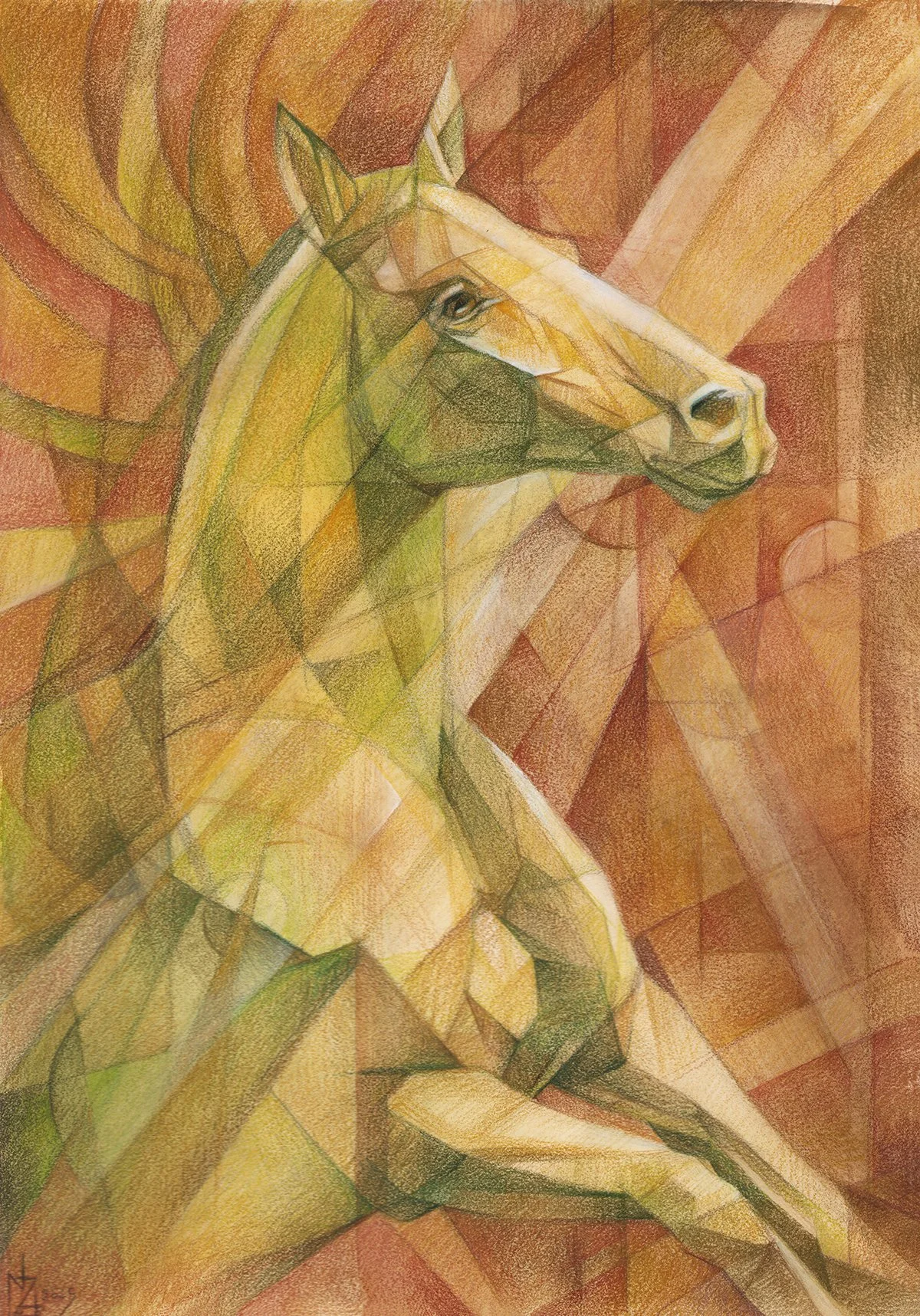
Per Lumen

Per Tenebras

Per Ignem

Per Glaciem
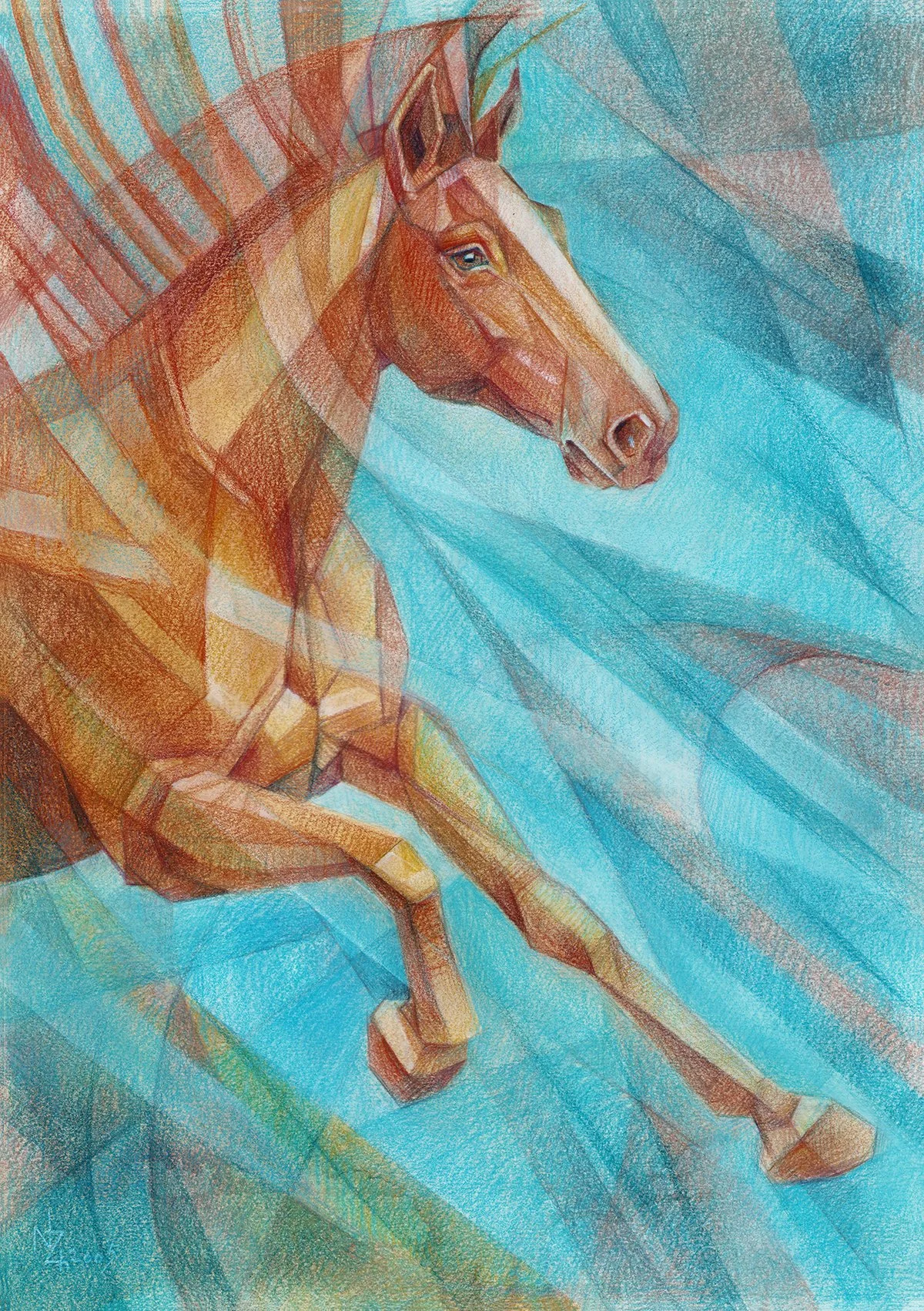
Per Ventum
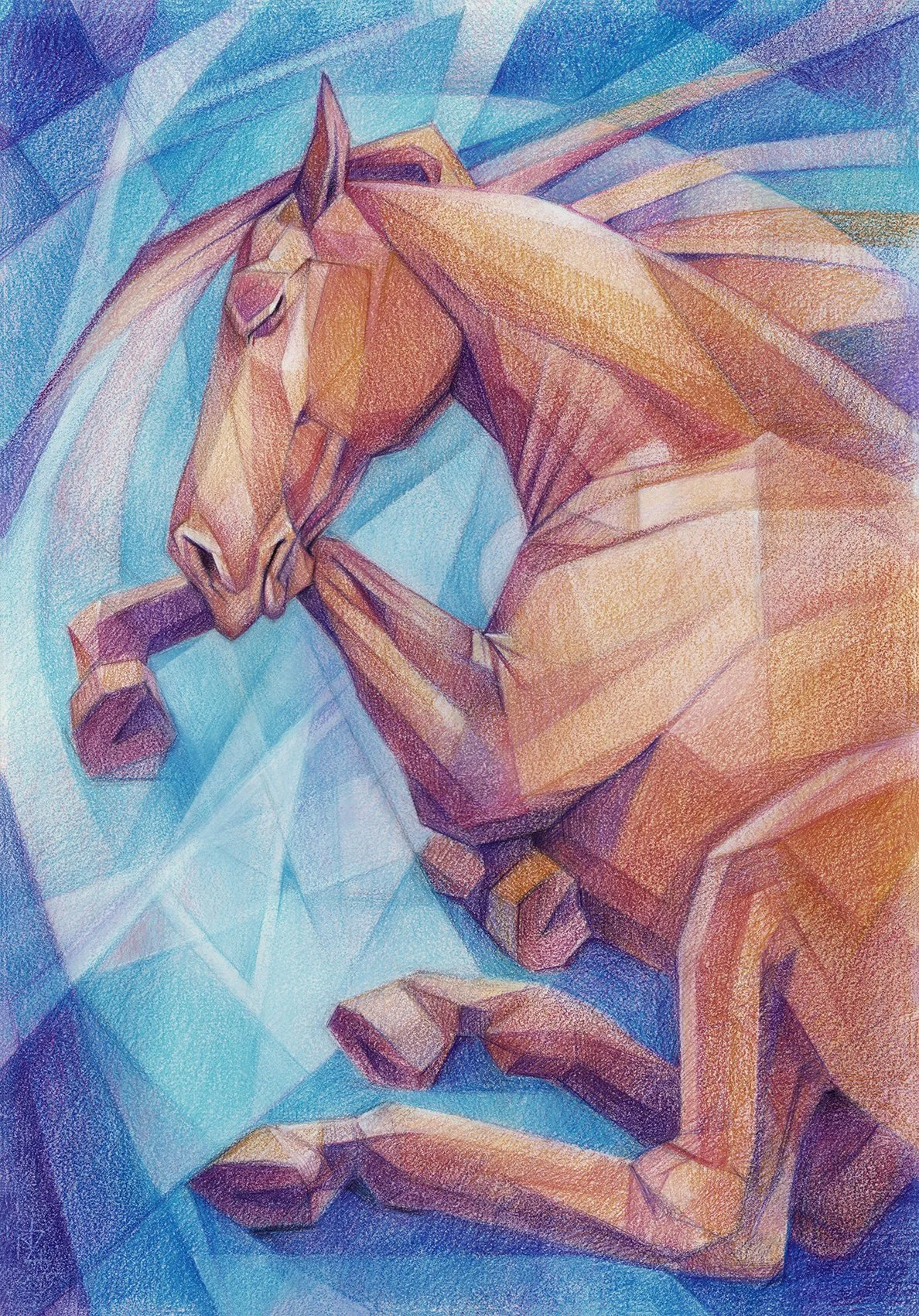
Per Somnum
Material Approach
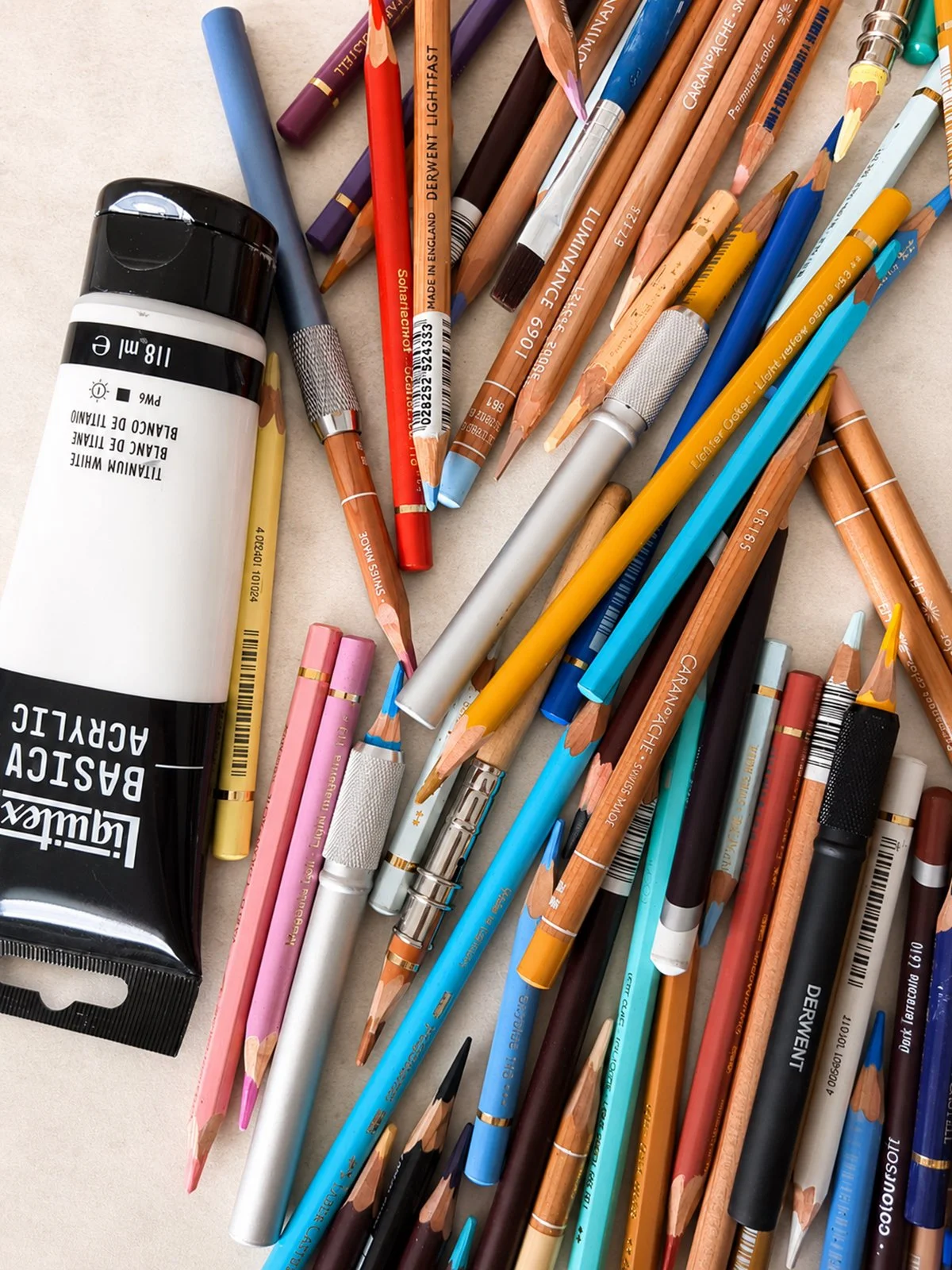
For this series, I specifically chose Arches Satin watercolor paper with a fine surface texture. Because the works are relatively small, I needed a paper that would hold both delicate detail and layered color without becoming too rough visually. It was also important that the paper could respond well to both watercolor and colored pencil. This 100% cotton paper works well with both: it accepts transparent watercolor washes, while still allowing colored pencil to build up gradually on the surface.
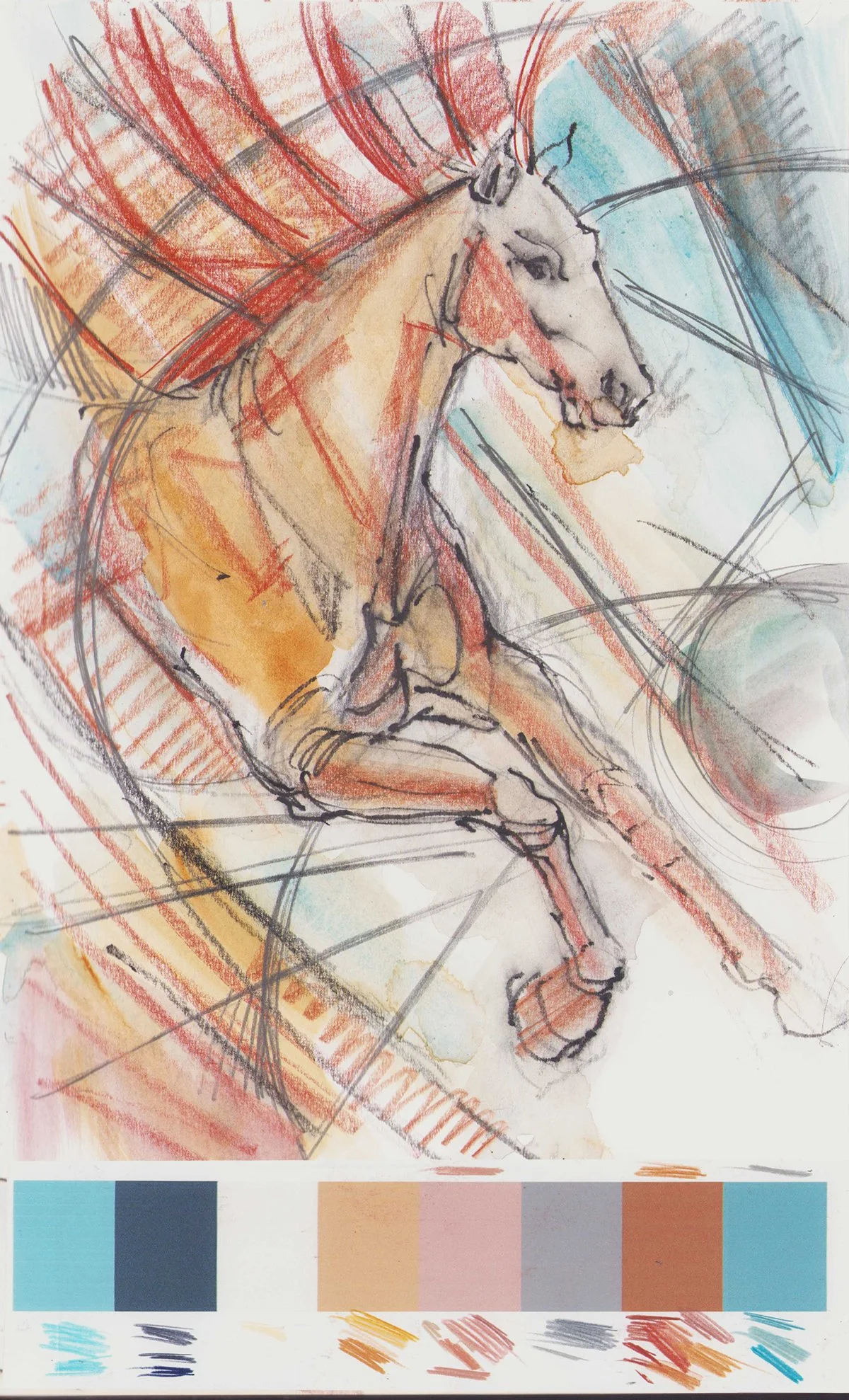
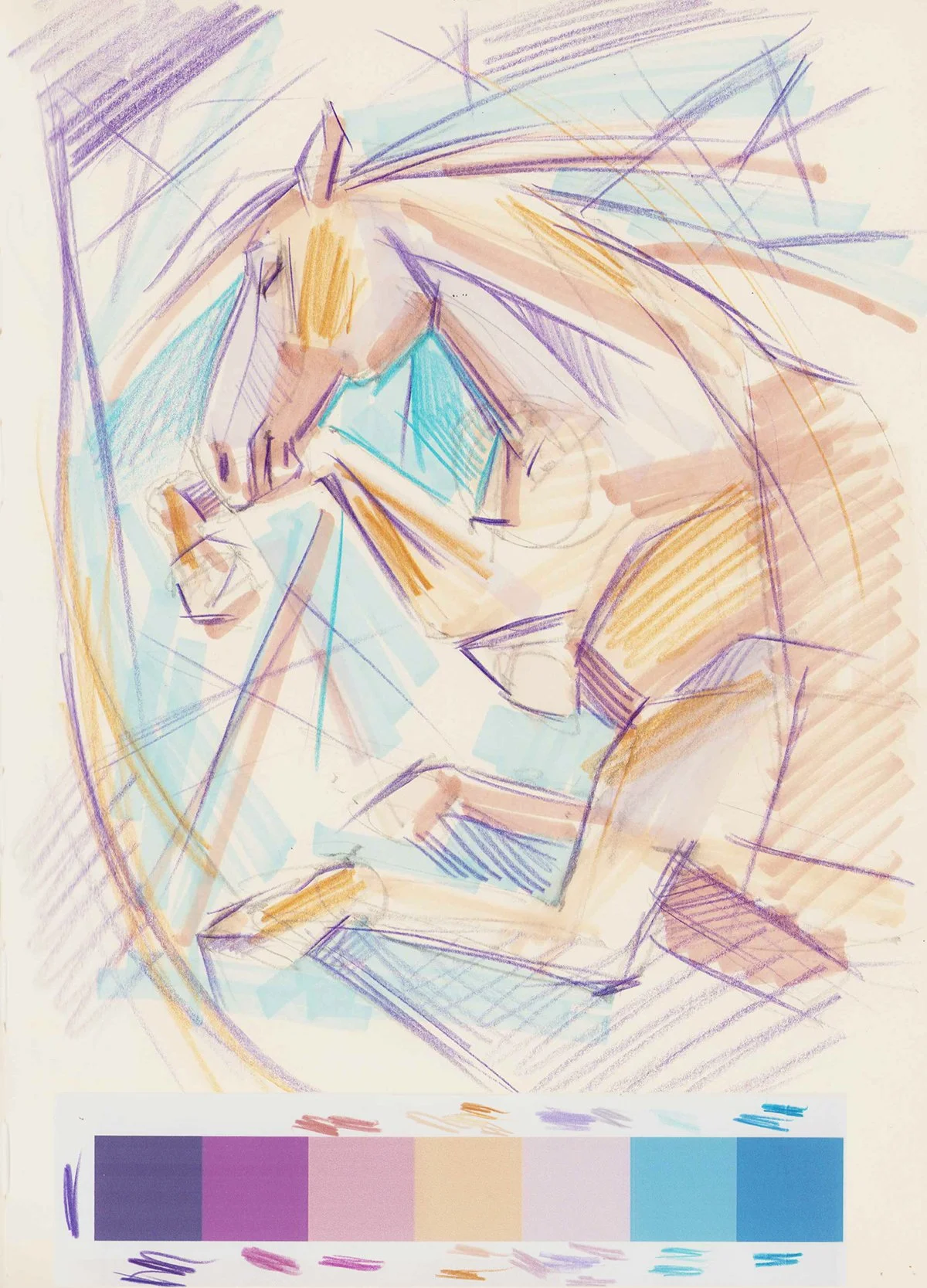
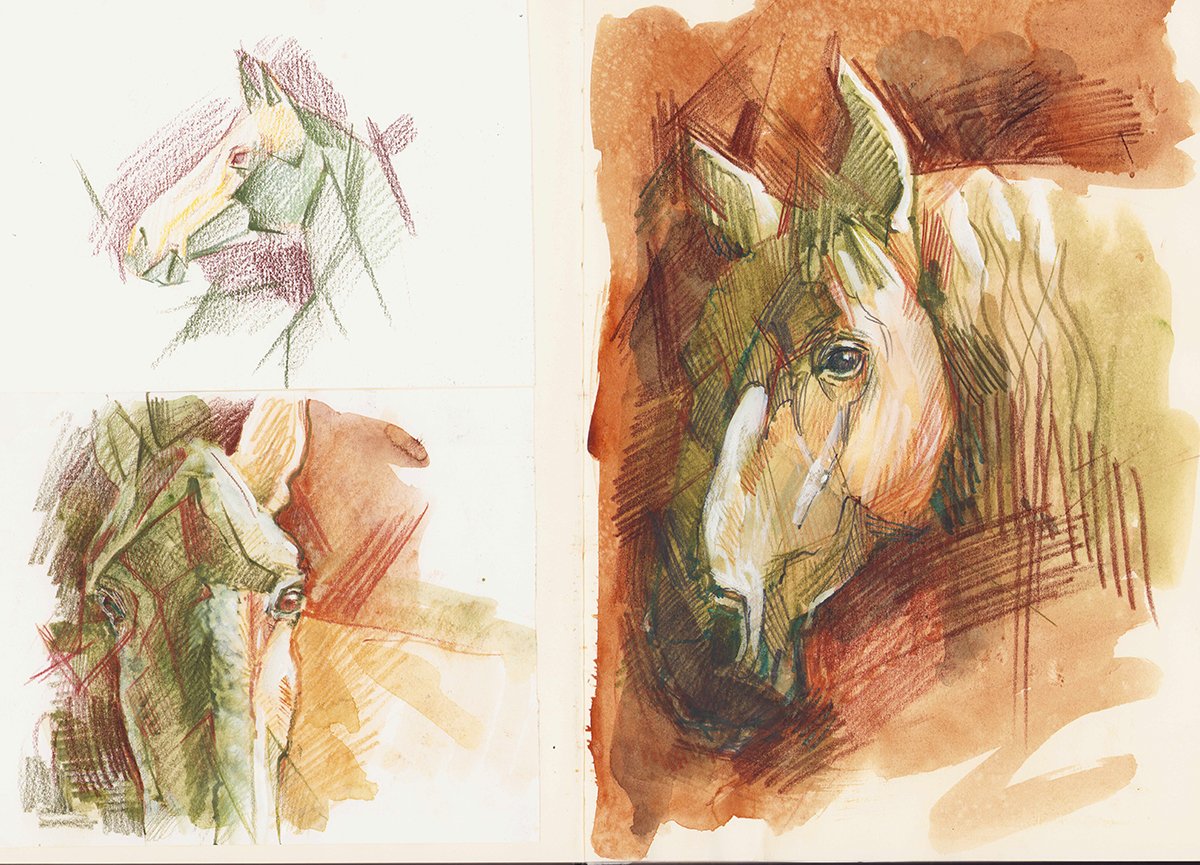
Each work begins with a graphite drawing, where I define the main proportions, anatomical structure, movement and composition of the horse. This underlying structure remains essential, even when the final image becomes fragmented or transformed.
I then apply very thin watercolor washes to establish the first color direction and to separate warm and cool areas. Over this, the image is built gradually with colored pencils, mainly through directional strokes. These layers enrich the color and strengthen the fractured structure of the work.
Acrylic white is used selectively to lighten, soften or interrupt the surface. Sometimes I apply it as a very thin, semi-transparent glaze, then continue drawing over it with colored pencil. In this way, light, correction and reconstruction become part of the same process.
For Equus Refractus, the paper is not only a support, but an active surface where structure, color and transformation are built layer by layer.
Process: From Crumpled Paper to Visual Language
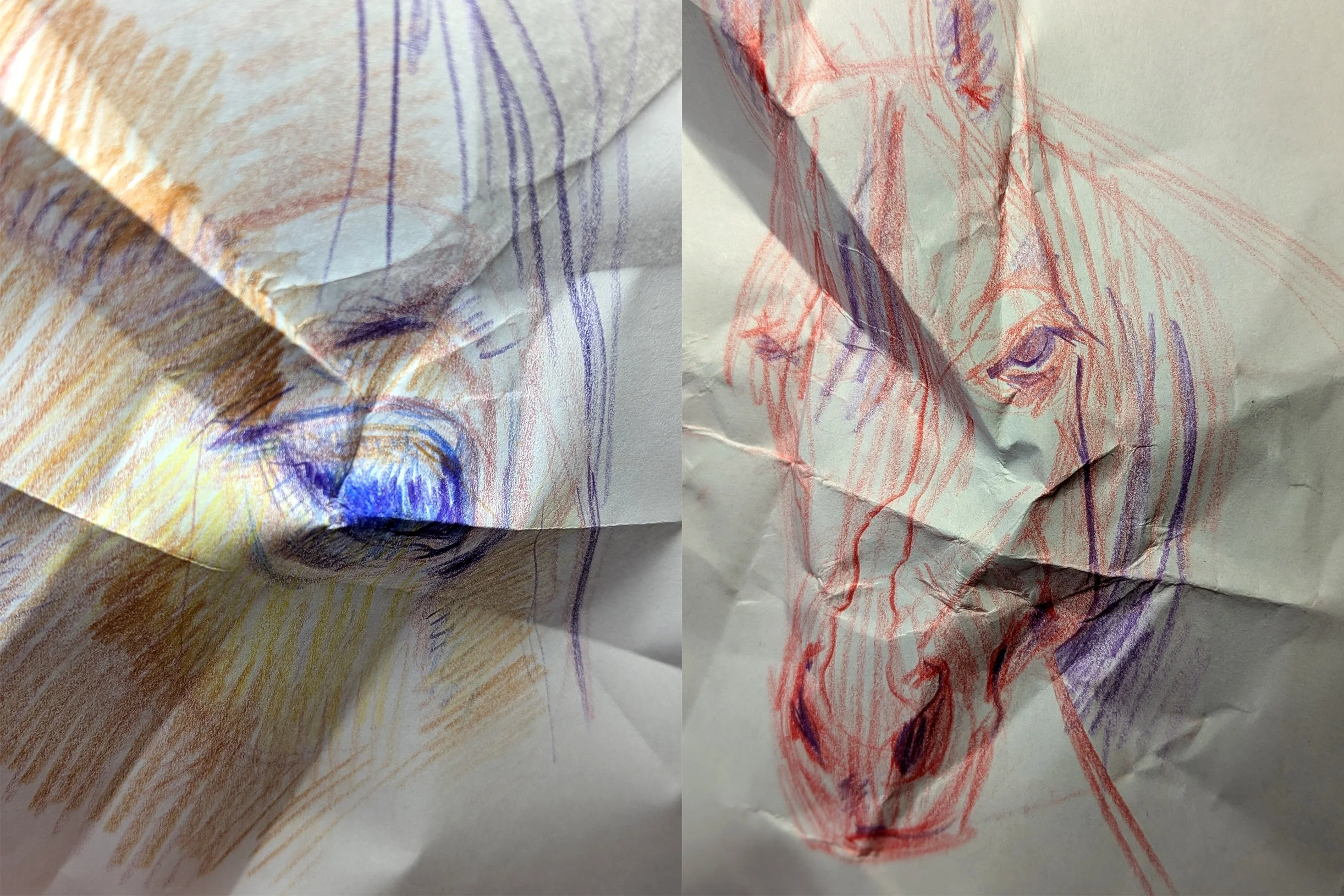
The idea for Equus Refractus began unexpectedly. I had made a drawing of a horse that did not work, and I crumpled the paper in order to throw it away. At that moment, the failed drawing suddenly revealed something important: the folds and creases of the paper began to deform the horse’s structure. The image was no longer simply damaged; it was transformed.
This accidental moment became the starting point for the project. I became interested in how a fold, a break or a change in surface could alter the construction of the horse: shifting its anatomy, redirecting the light and creating a new internal structure. What first appeared as destruction began to suggest a method of transformation.
From there, I started to look more closely at the visual relationship between crumpled paper and crystalline form. Both contain fractures, planes and changes of direction. Crumpled paper is soft, fragile and accidental; crystal is hard, structured and precise. The visual language of the series developed between these two states — between the vulnerability of paper and the clarity of geometric structure.
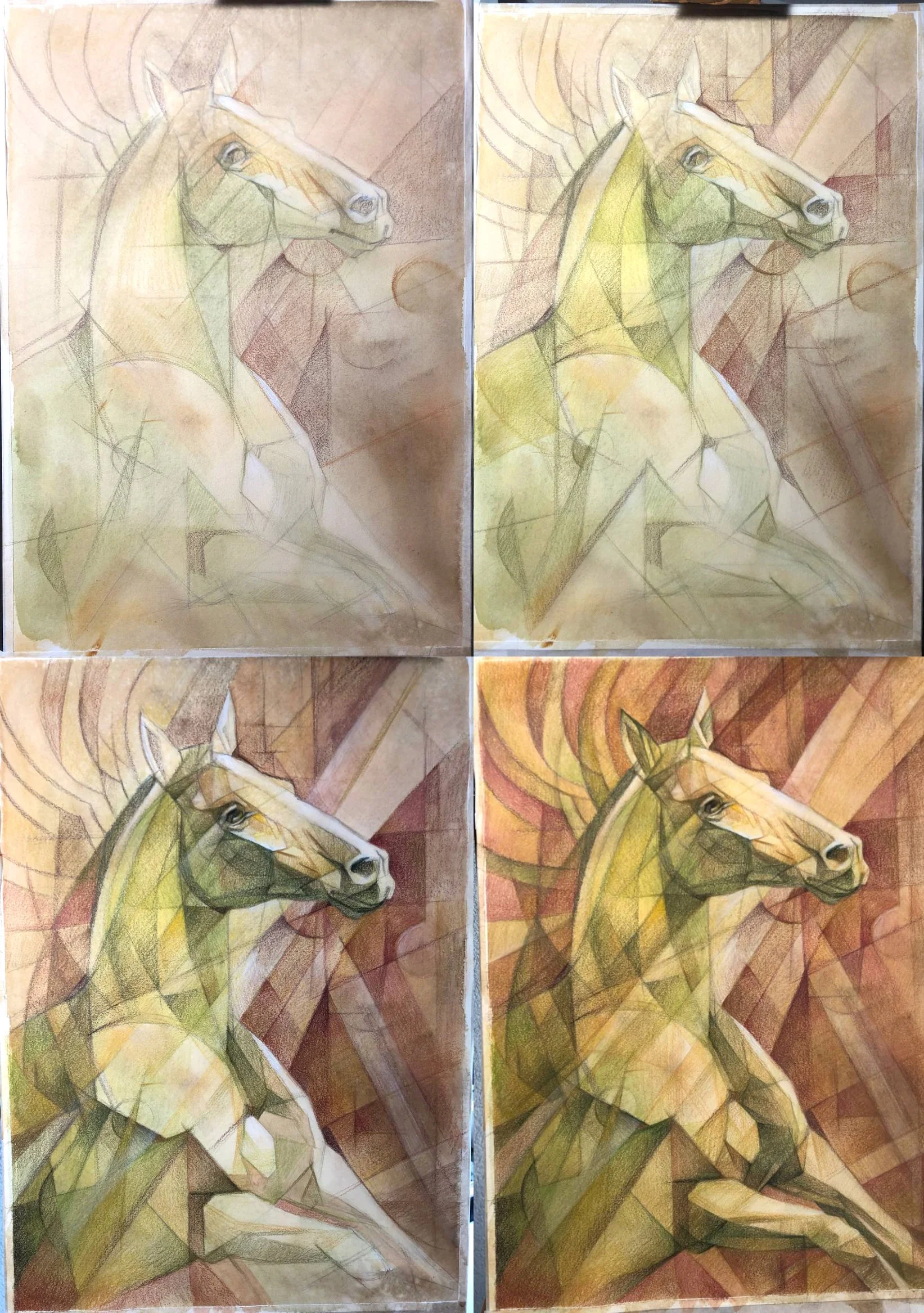
In the final works, the literal folds of paper are no longer present. Instead, they are translated into fractured planes, layered colour, directional strokes and shifts of light. The horse remains recognisable, but its body is changed by the forces acting upon it. This became the foundation of Equus Refractus: a series about refraction, resistance and transformation.