Mercury
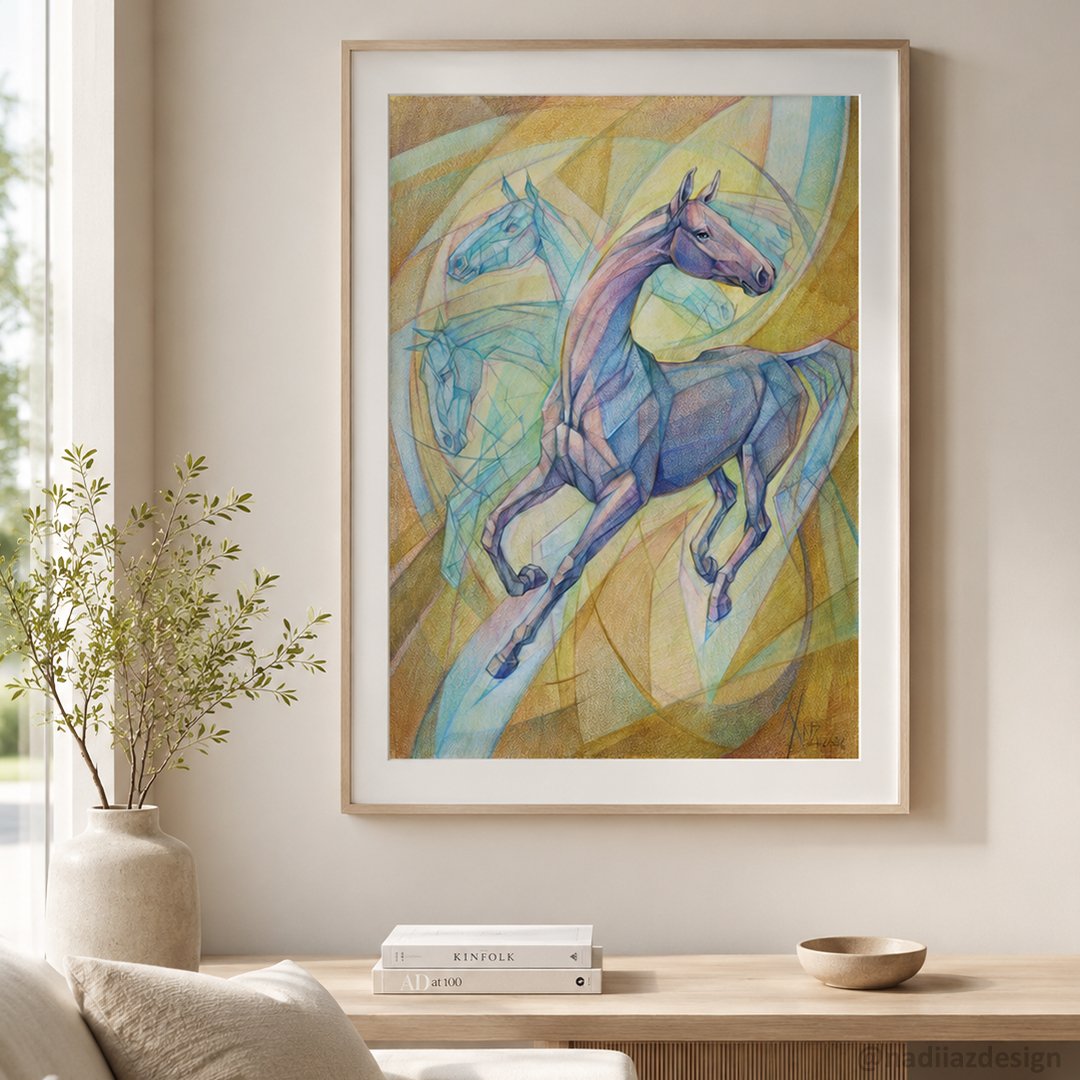
Size: 40 × 55 cm
Materials: Colored pencil on paper
Year: 2026
This artwork is available for sale. For pricing and shipping details, please contact me directly through the Contact page, and I’ll be happy to provide all the information.
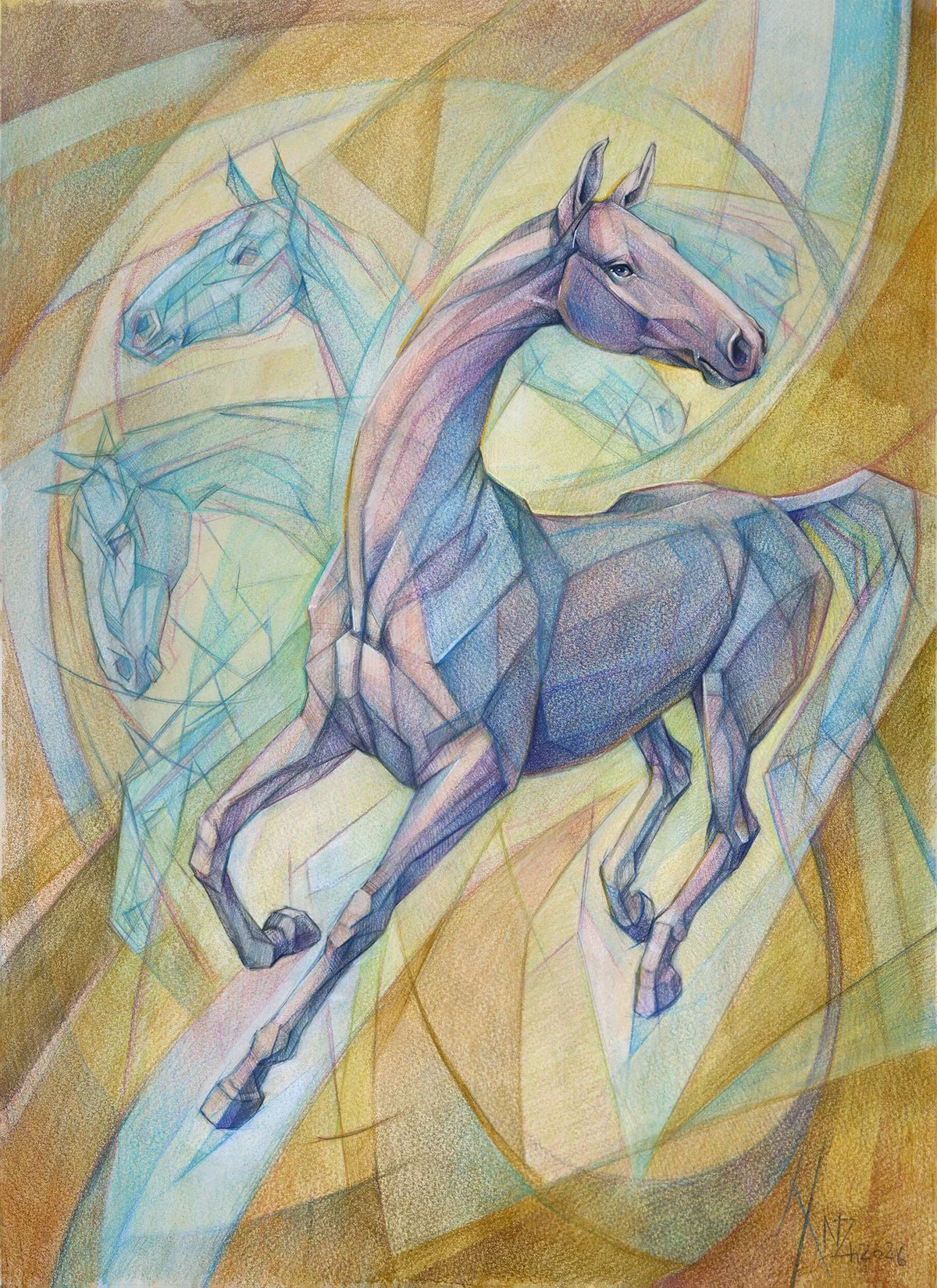
Mercury is the second work in the Living Metal series. If Gold represents density, value, and inner stability, Mercury explores another state of living metal: fluid, unstable, reflective, and impossible to fully contain.
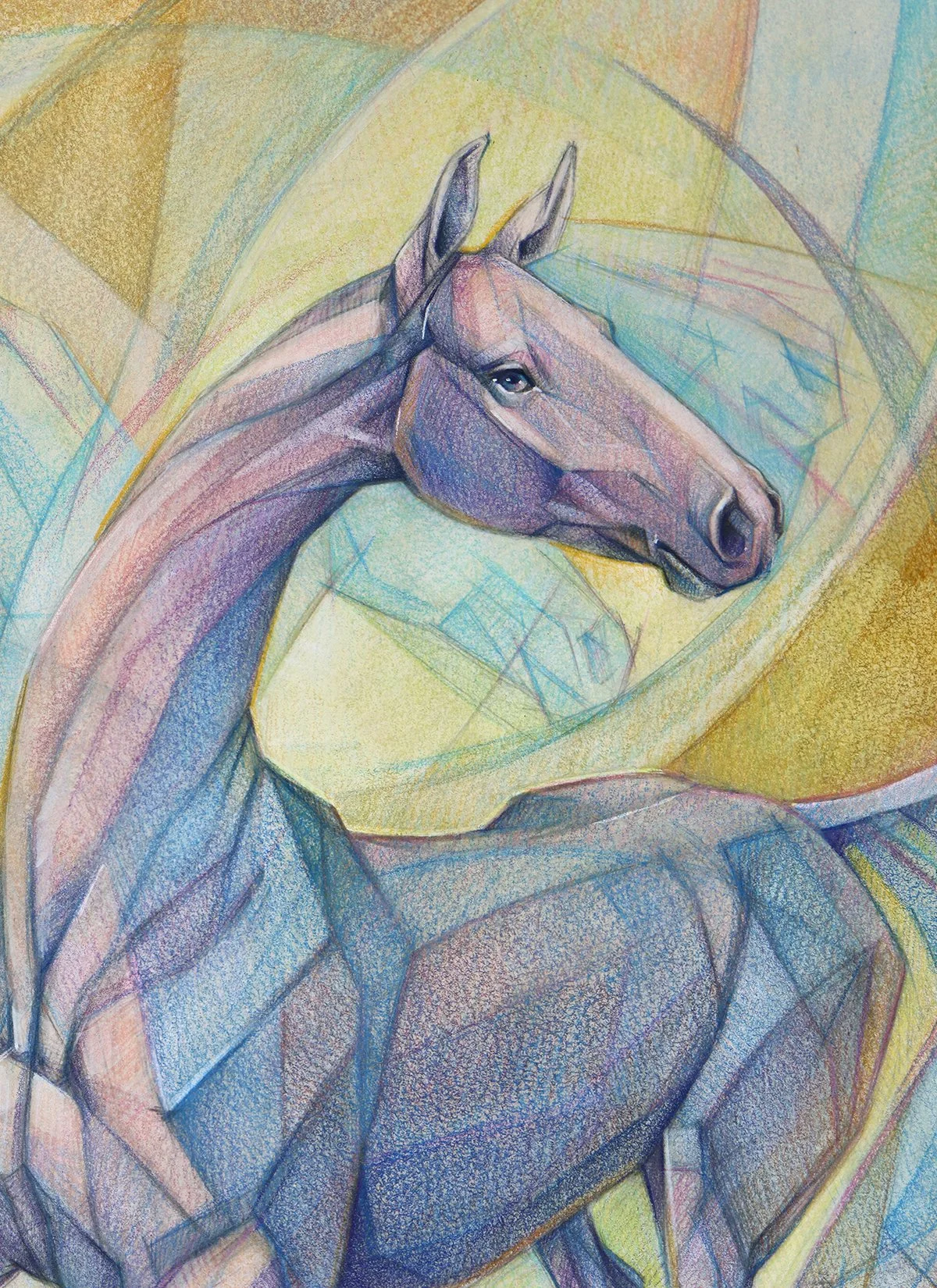
In this work, the Akhal-Teke horse is not presented as a fixed image, but as a form existing through movement. The body remains recognizable, yet it appears through phases, echoes, and reflections. The image does not dissolve completely, but it also refuses to stay still. It gathers, shifts, melts, and re-forms.
For me, mercury contains a powerful contradiction. It can gather into a dense drop and hold its own integrity, but in its liquid state it resists any fixed shape. It cannot truly be moulded or tamed. It can only be contained for a moment; in freedom, it moves according to its own laws.
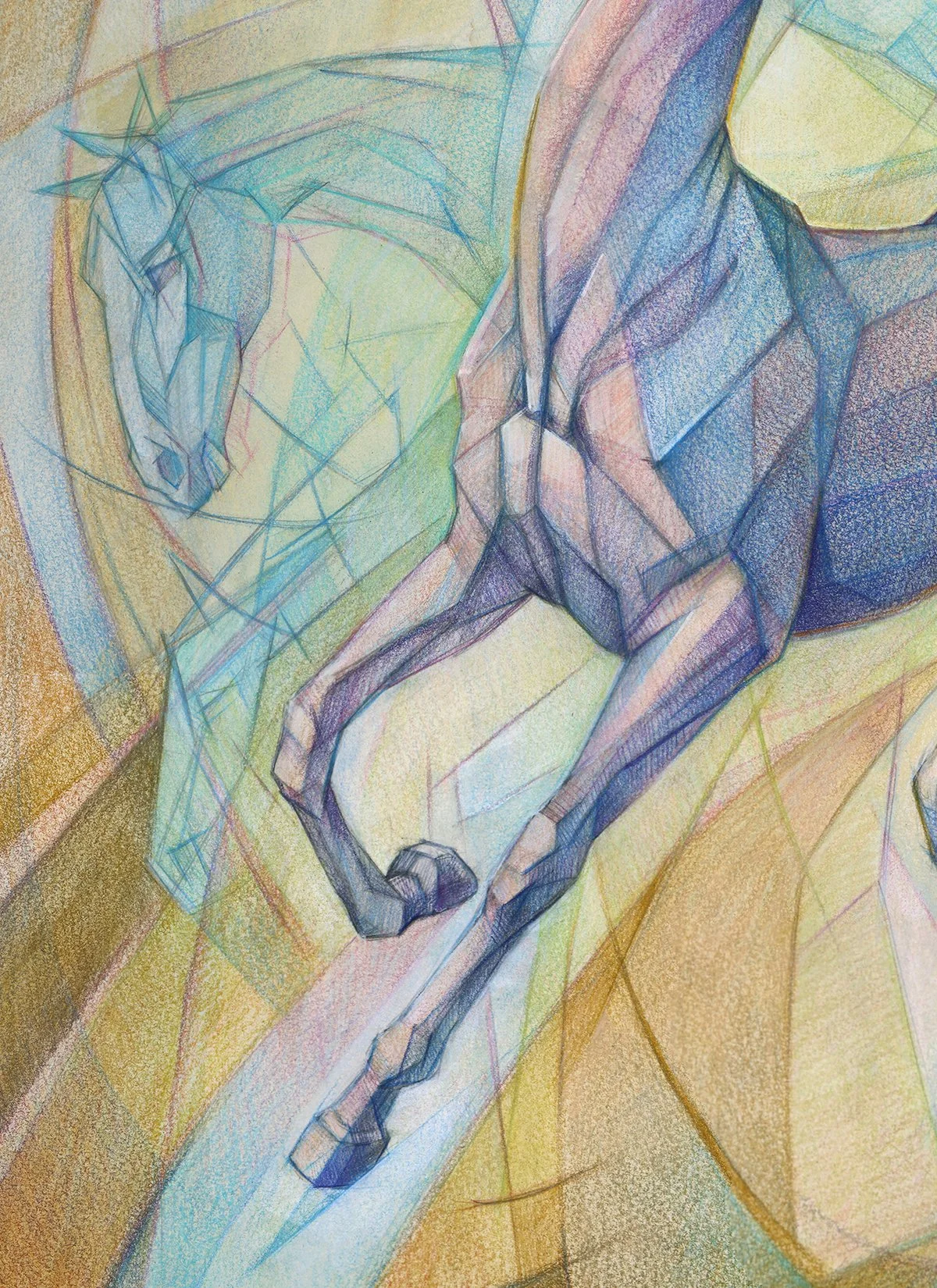
This idea shaped the entire composition. The main figure is supported by visible echo-forms that suggest phase movement rather than literal sequence. They are not separate horses, but temporary states of the same image — reflections, traces, and displacements through which the form becomes unstable while still remaining whole.
The colour palette is more restrained than in Gold, although it remains connected to the same visual world. The balance of colour has shifted: cooler tones, silvery greys, blues, and violet reflections come forward. Unlike gold, which seems to contain its own inner radiance, mercury reflects the world around it. Its colour is less a possession than a surface event — something created by light, movement, and surrounding space.
The background is not a passive setting. It acts as a medium for the metal itself. Its arcs, planes, and directional structures support the movement of the horse: the S-shaped rhythm of the body is answered by circular motion in the echo-heads and surrounding space. The result is a form that seems to flow inside its own field, constantly moving between body, reflection, and trace.
Mercury is a work about a form that cannot be fully fixed. It preserves the structure and breed identity of the Akhal-Teke, while allowing the image to become fluid, unstable, and elusive. It is living metal in transition — between gathered body and liquid movement, between presence and disappearance, between form and freedom.