Living Metal: Gold
— Process Notes
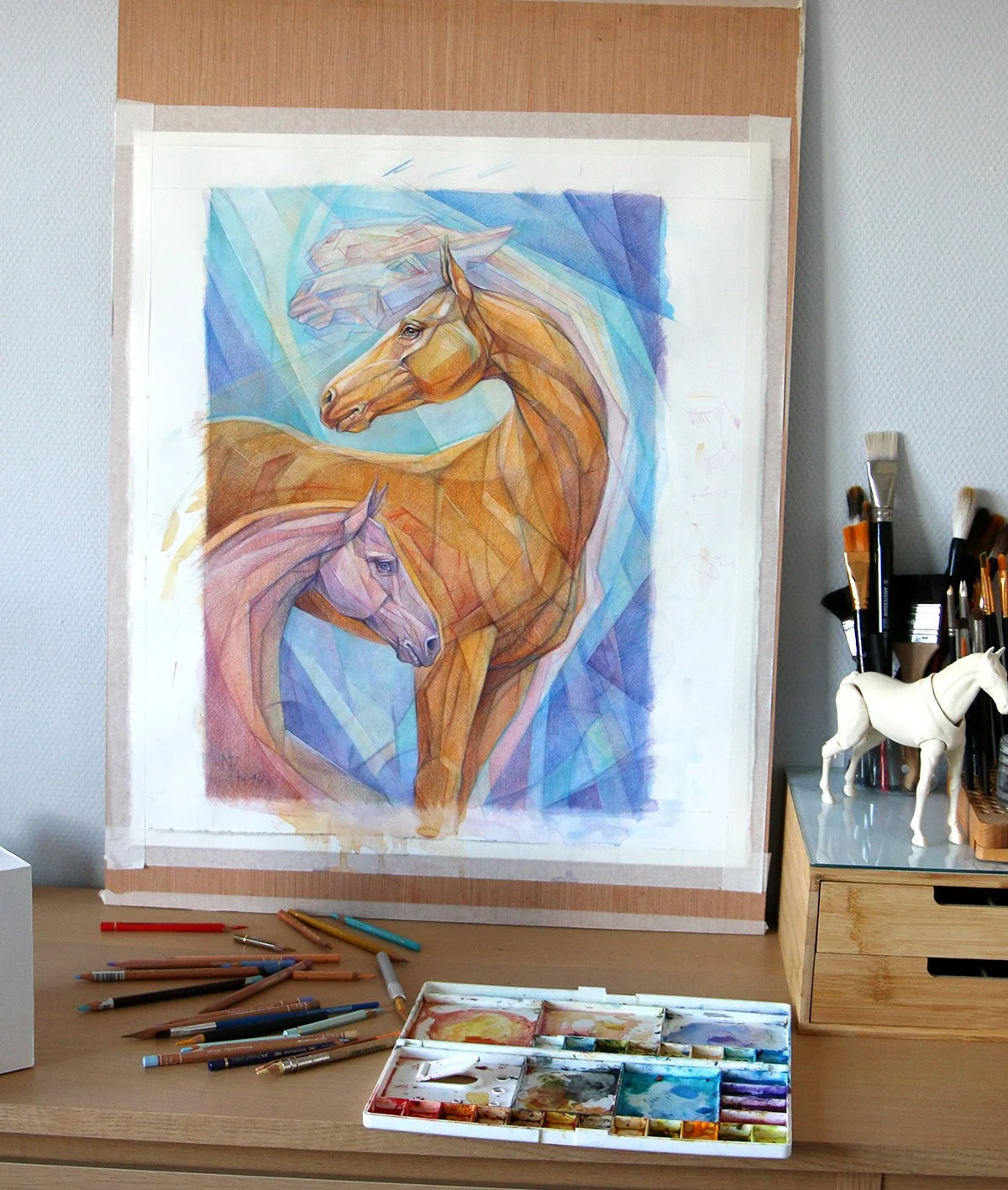
This journal documents the development of the first work in the Living Metal series, from the initial compositional studies and palette decisions to the construction of the final drawing.
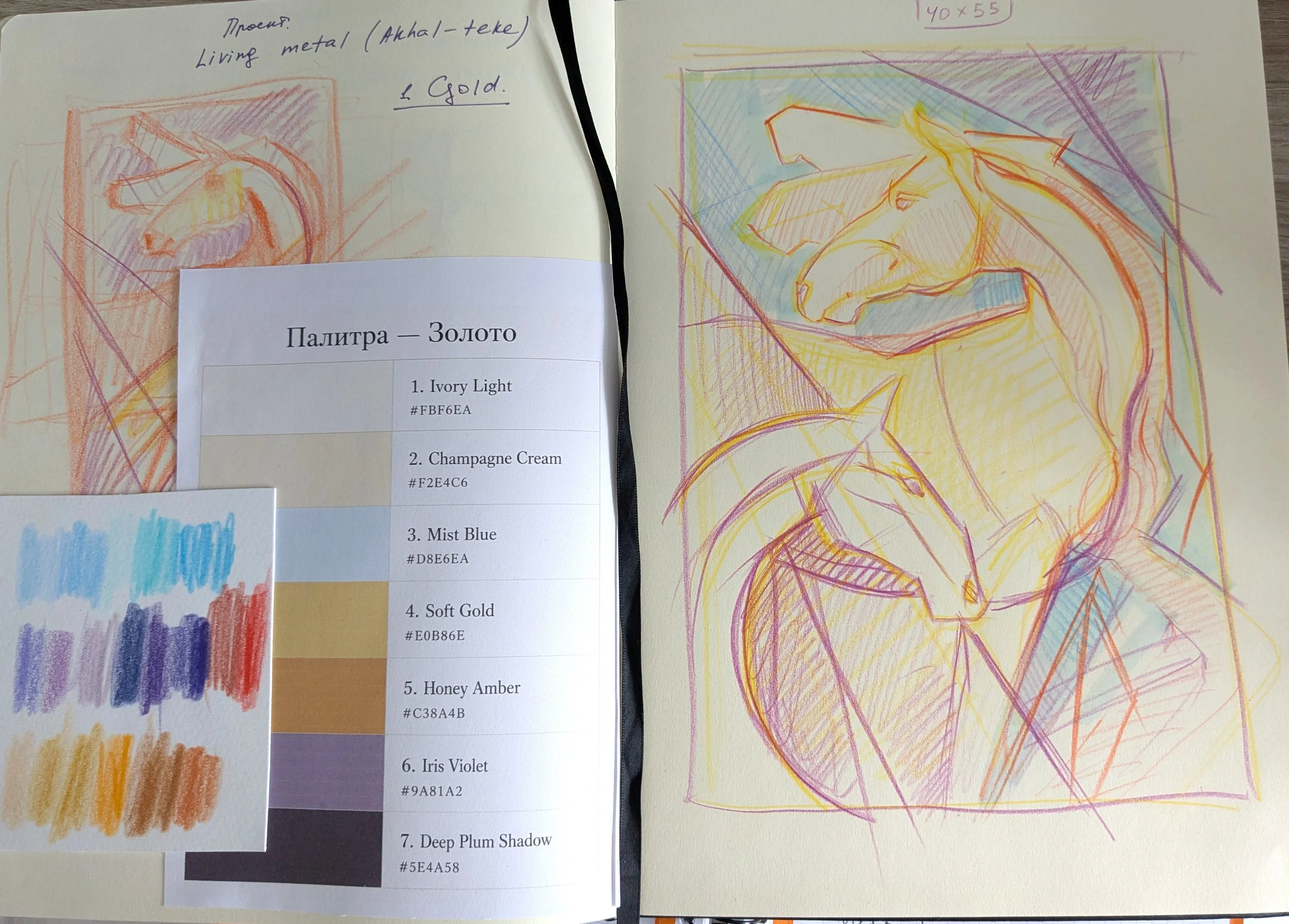
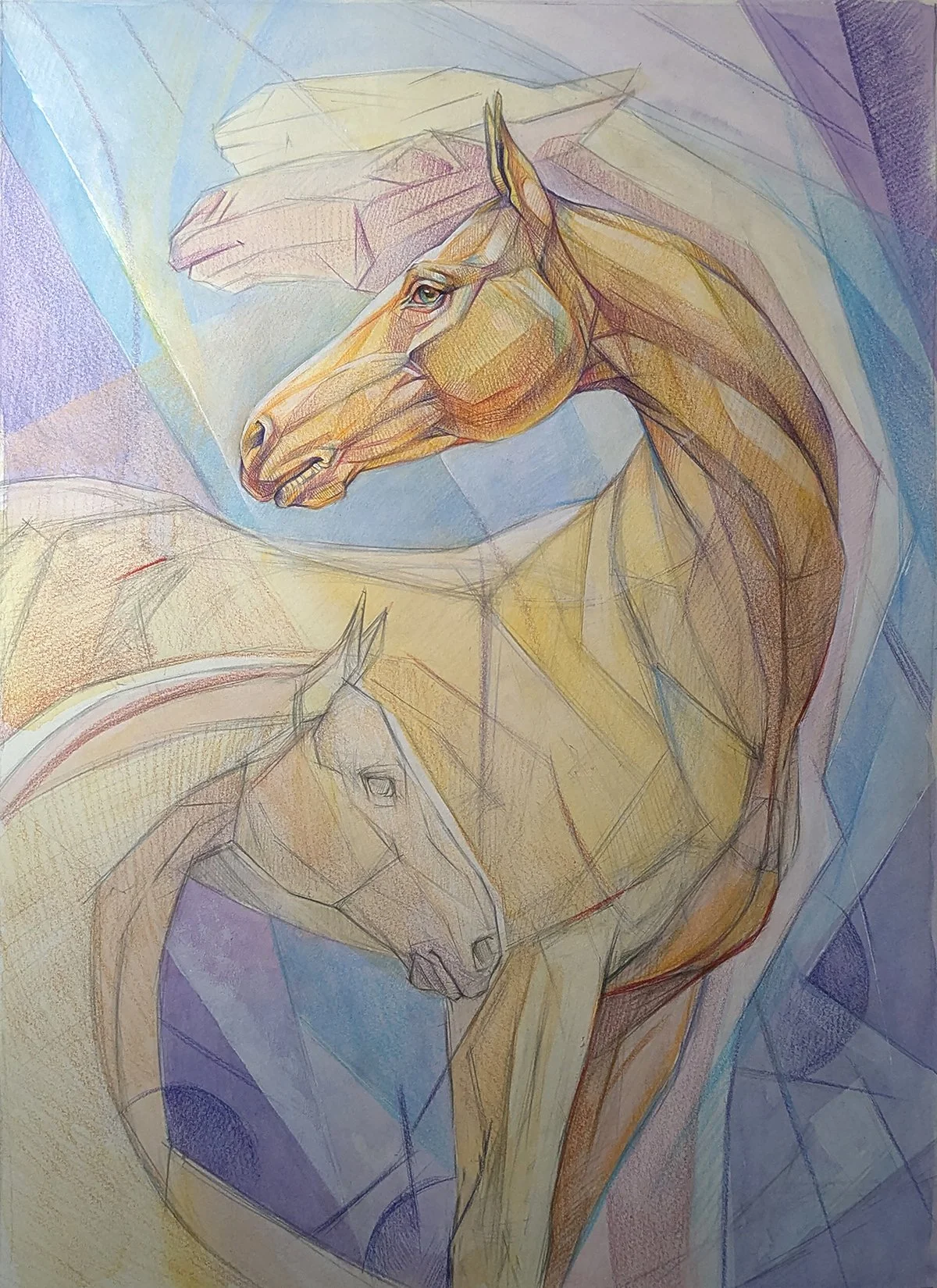
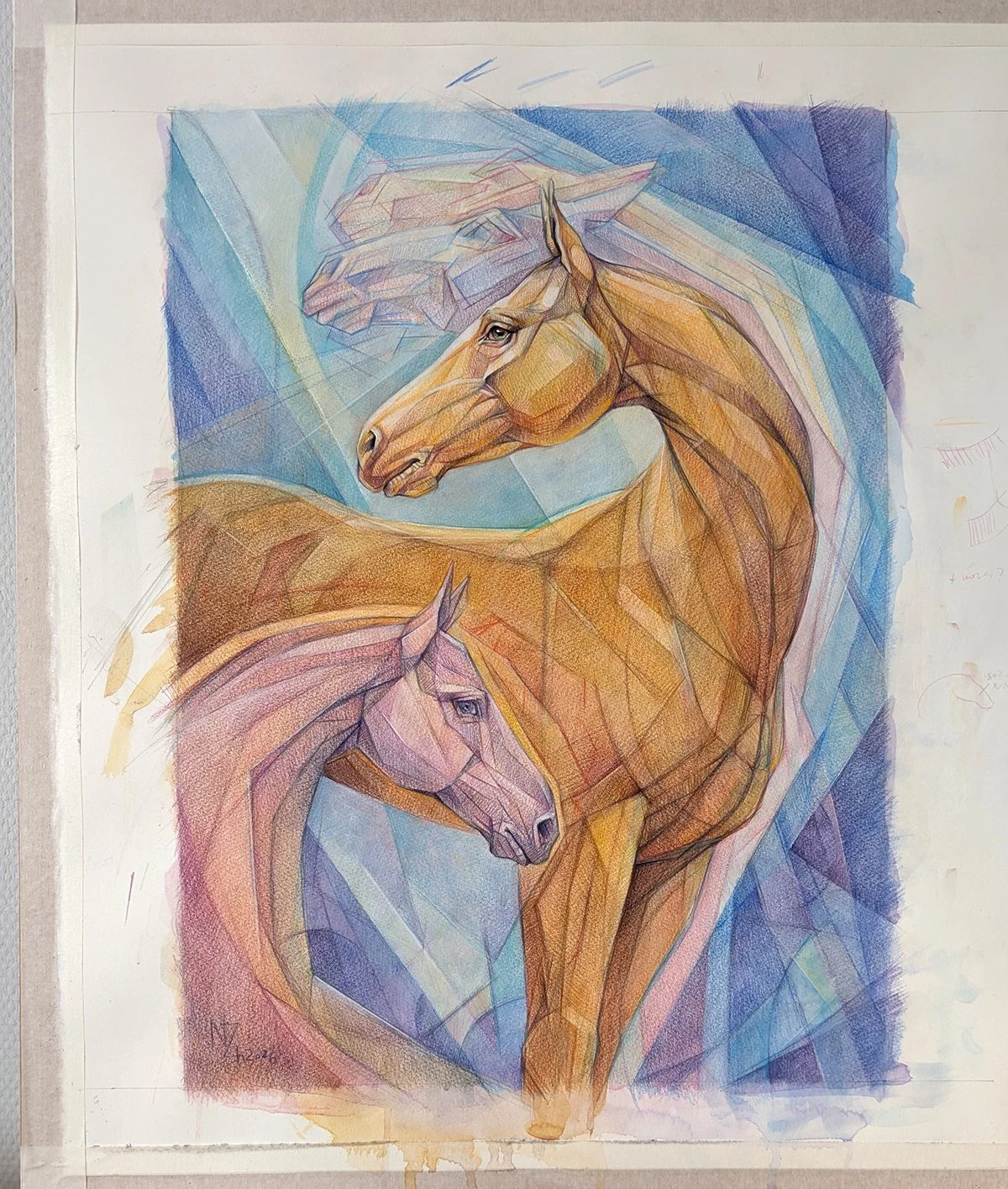
The first stage focused on establishing the composition. The image was built around an S-shaped movement, intended to reflect the elegance, tension and living rhythm of the Akhal-Teke horse. Diagonal structures were also introduced to strengthen the sense of direction, pressure and spatial movement.
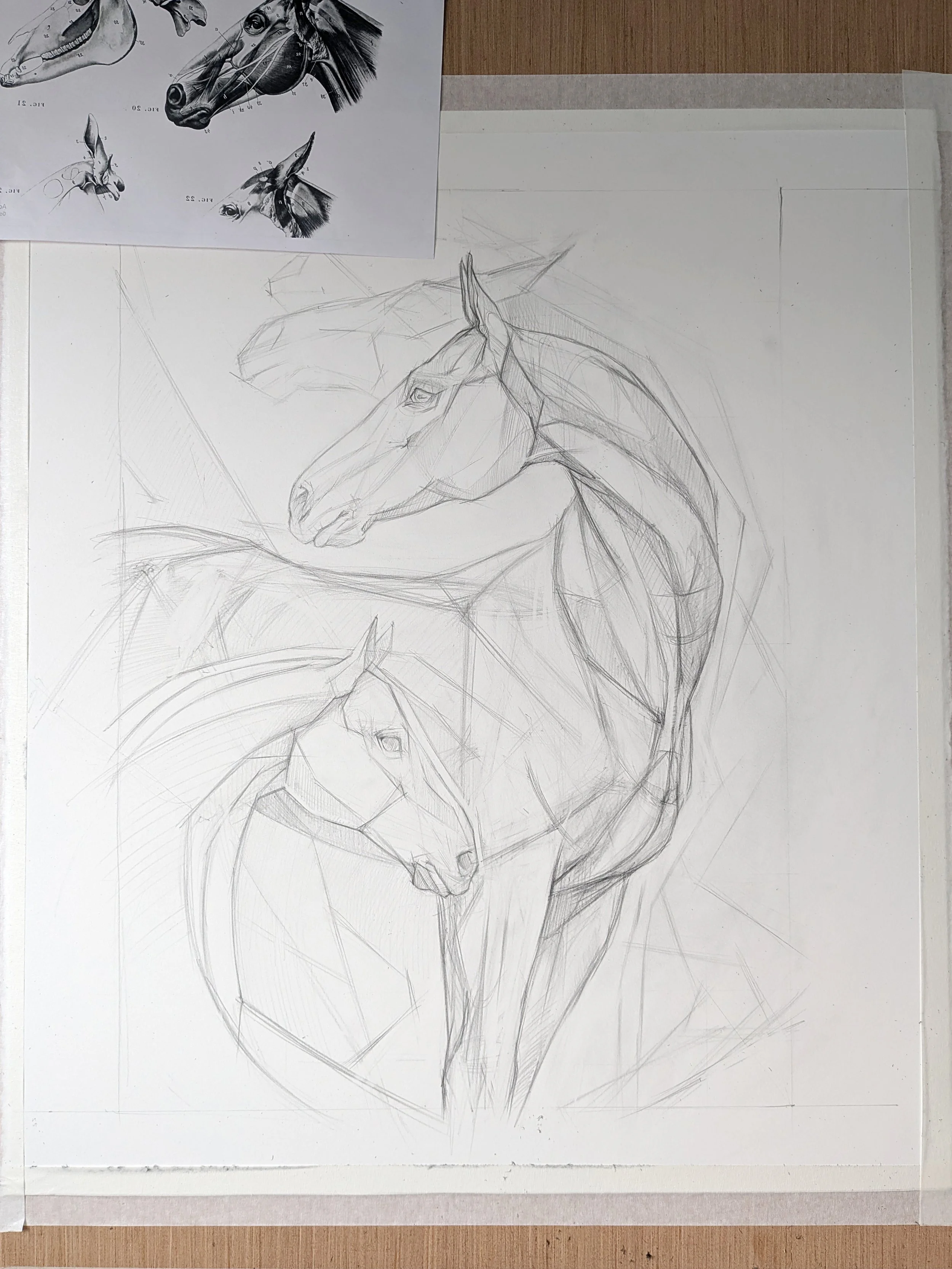
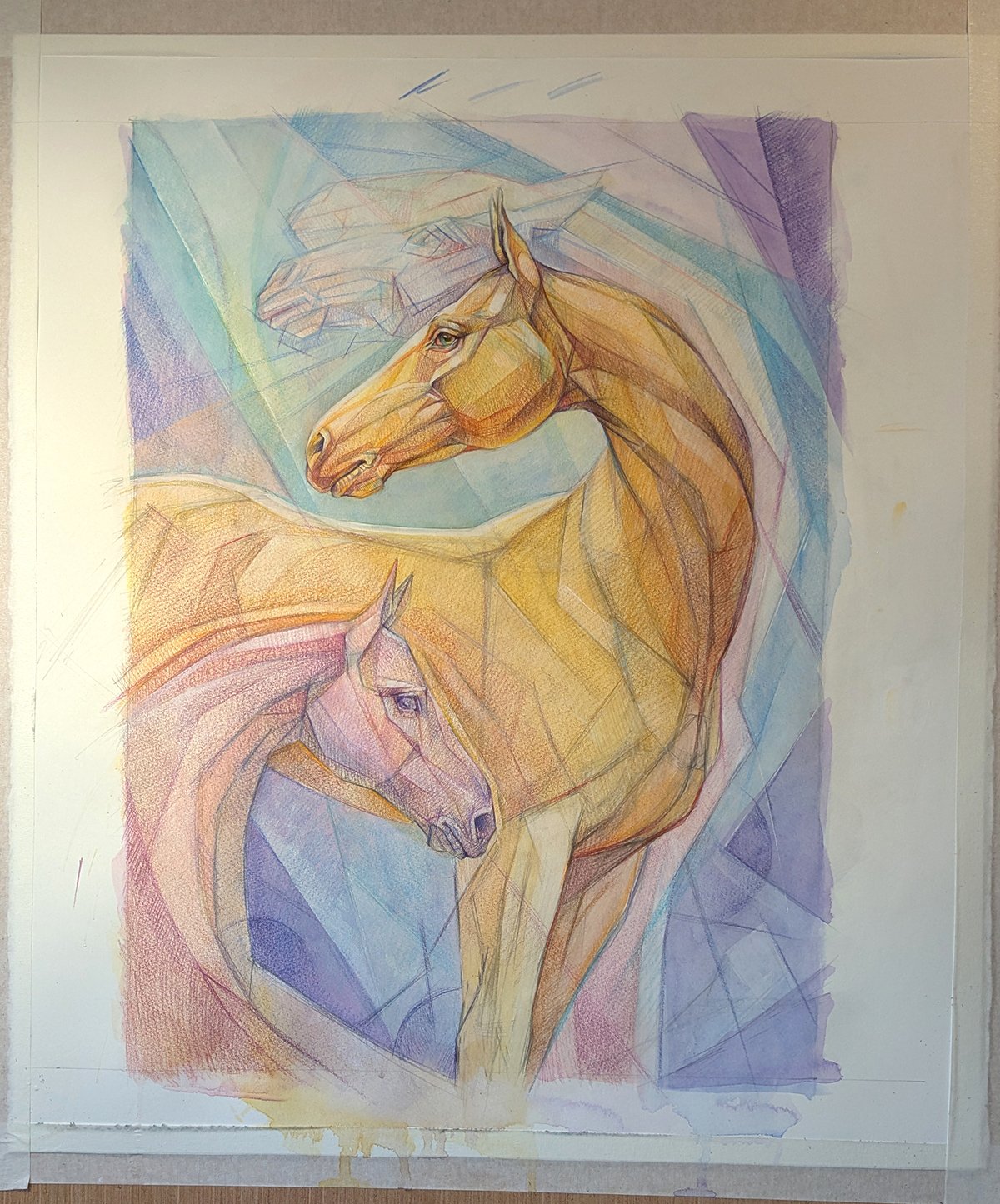
After the compositional framework had been established, the work moved into the construction of the main drawing. At this stage, the primary focus was on anatomical reliability. Since the visual language of the series involves crystallisation, fragmentation and metallic transformation, the underlying living body needed to remain structurally convincing before further stylisation could take place.
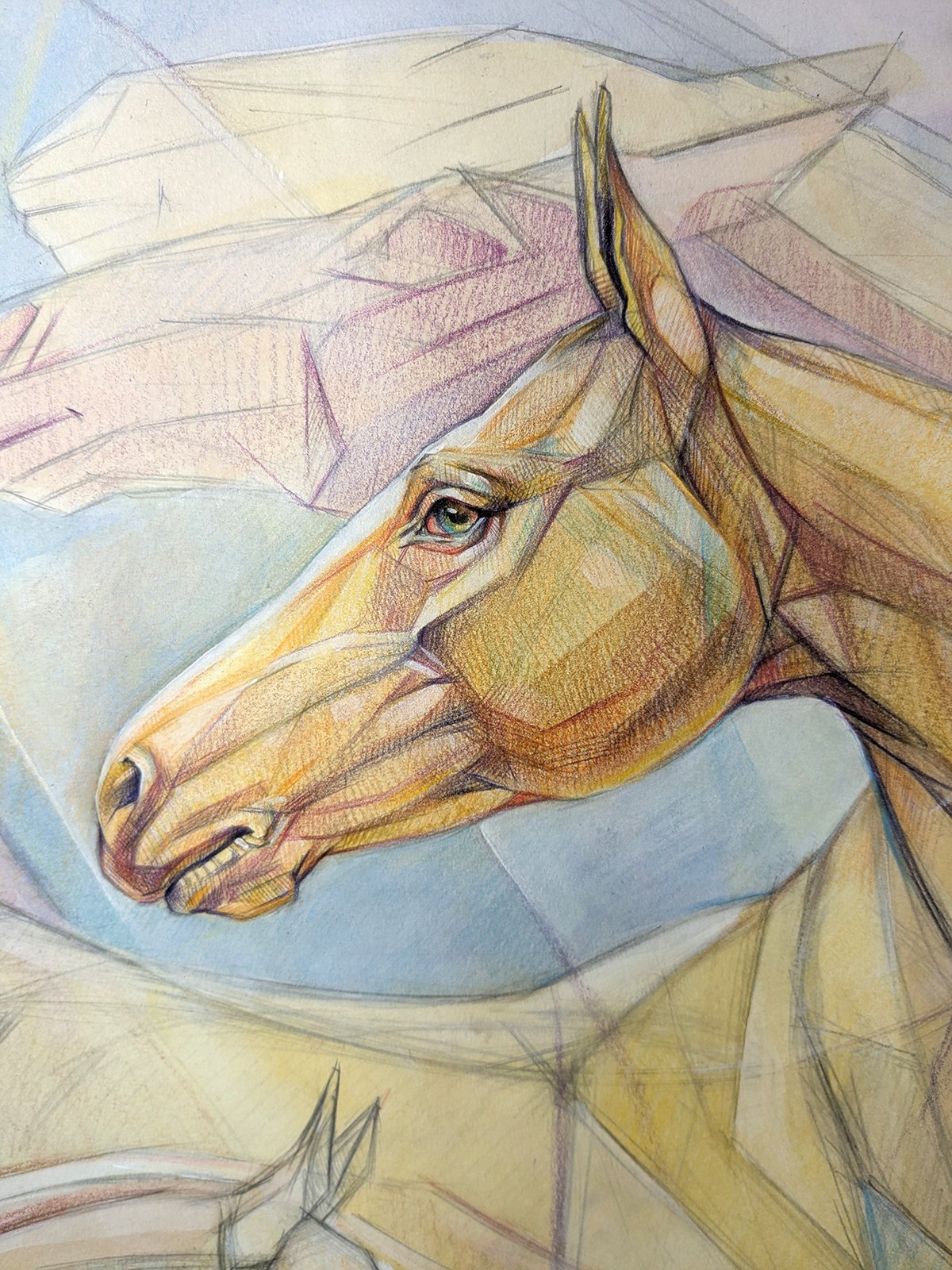
One of the main technical challenges was the construction of the head. A suitable reference for the exact turn required in the composition was not available, so the form had to be developed through a combination of anatomical knowledge, visual memory and several partial references. This resulted in a number of structural questions that had to be resolved during the drawing process.
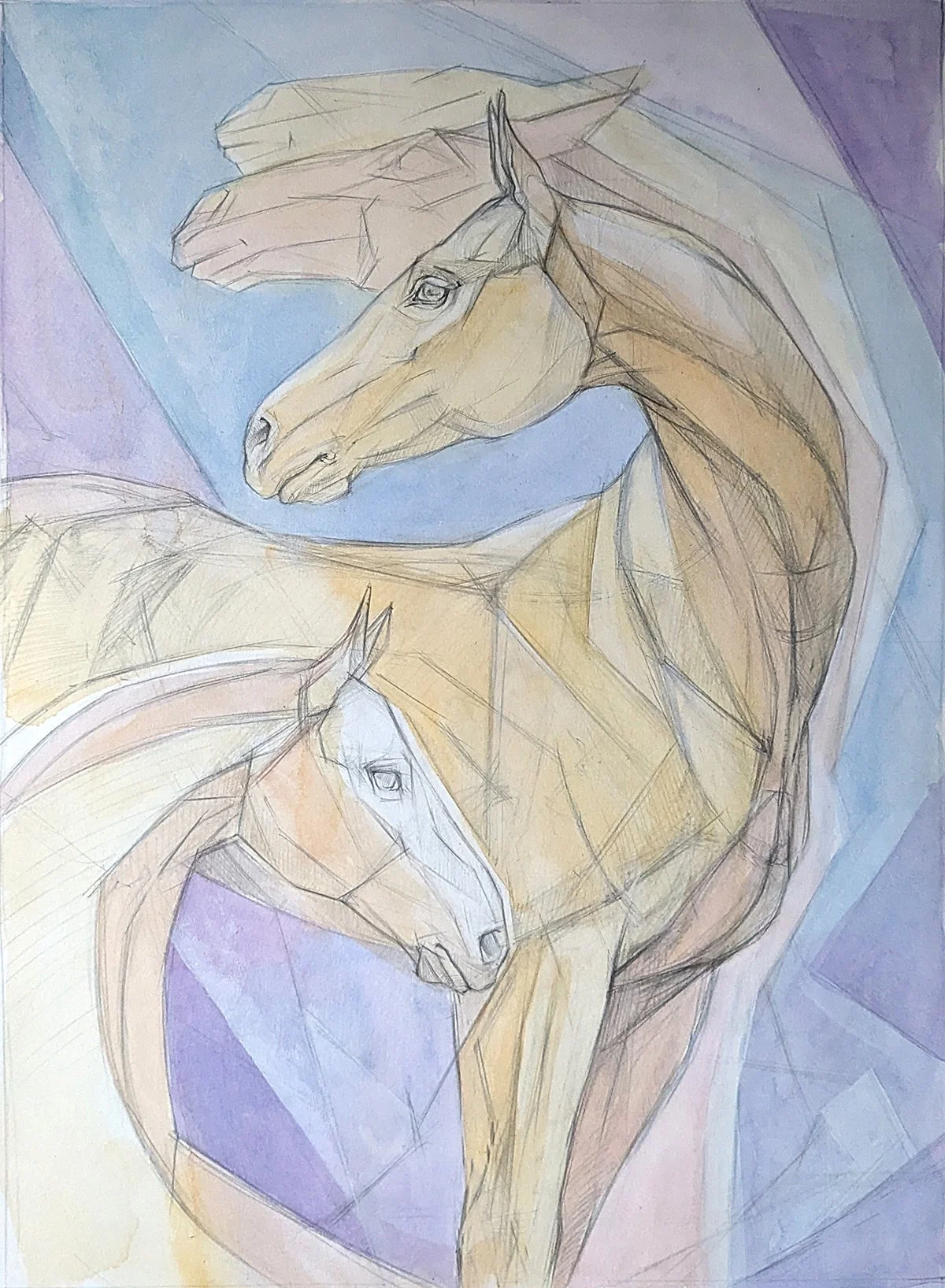
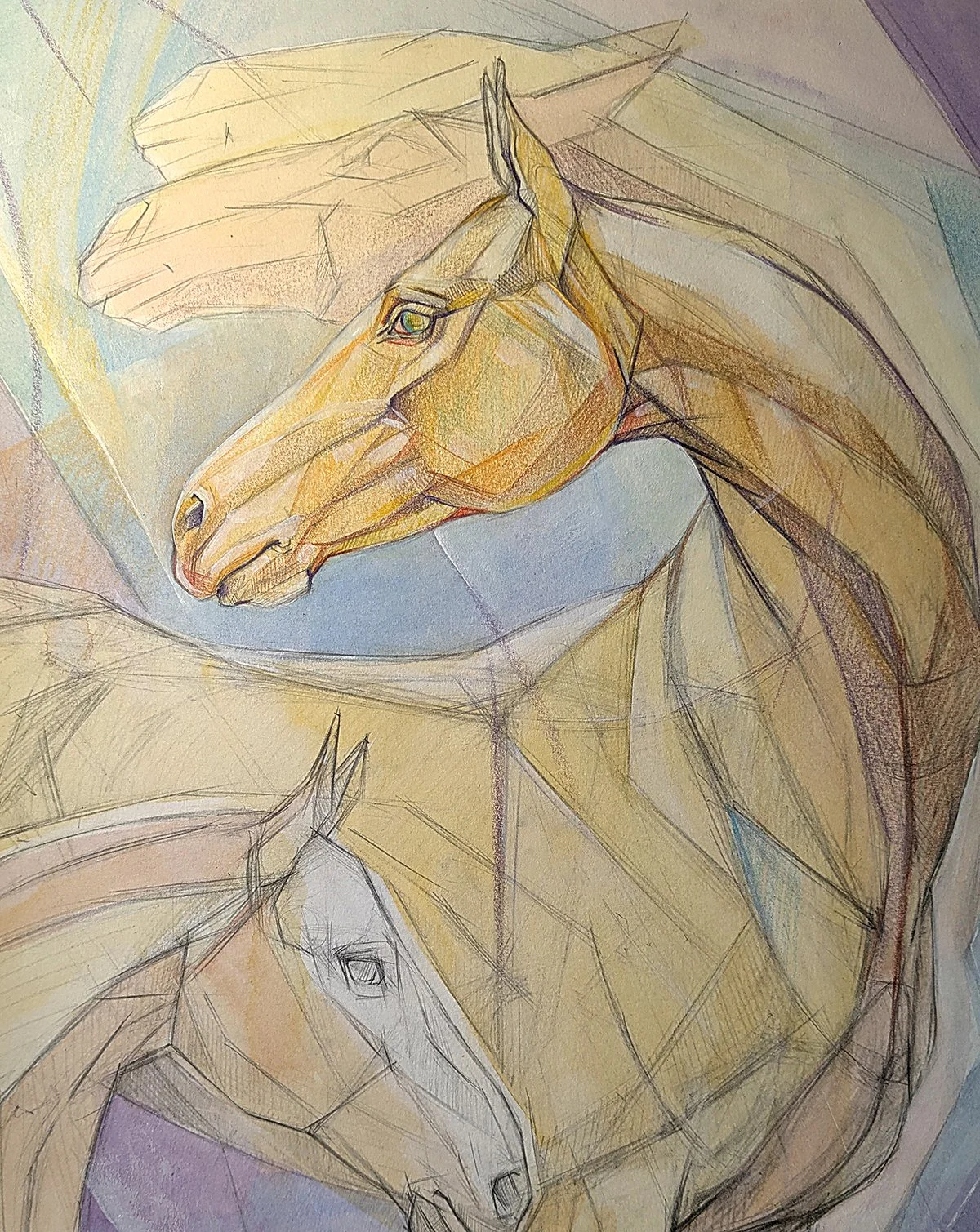
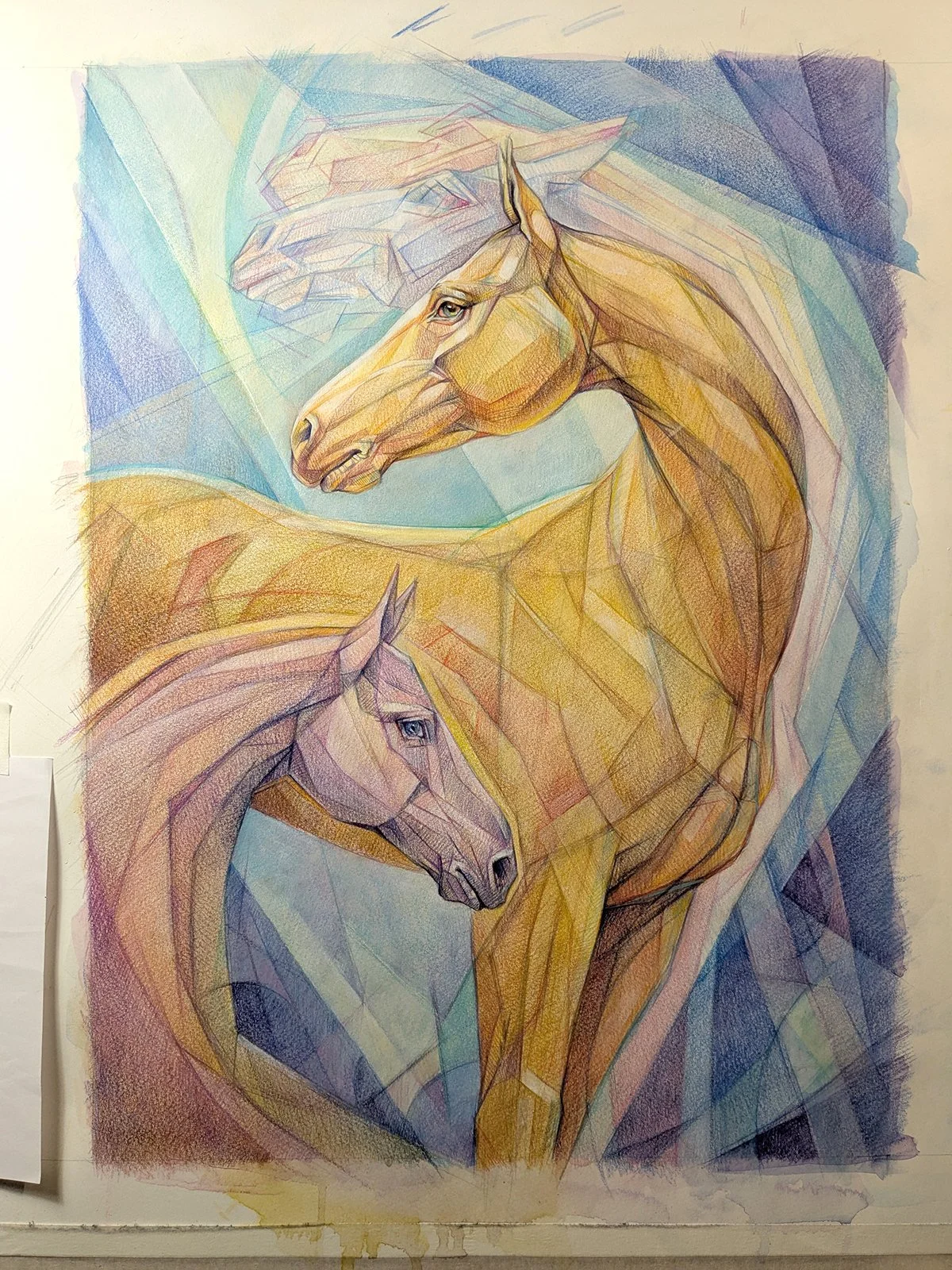
A second important issue was the visual hierarchy between the different heads. The main horse needed to remain dominant, while the additional heads functioned as echoes of movement and transformation. The foreground head presented a specific compositional problem: although it is positioned visually in front, its conceptual role is secondary. The level of detail, realism and contrast therefore had to be carefully controlled to prevent it from taking over the composition.
The palette was developed in relation to the concept of living gold. Warm reflected light, metallic shifts, transparent transitions and cooler shadows were used not as decorative colour effects, but as structural elements connecting anatomy, light and material. Colour decisions were therefore integrated into the conceptual development of the work rather than treated as a separate final layer.
This first work clarified several key directions for the Living Metal series: the importance of maintaining anatomical credibility within transformation, the role of movement echoes as a structural device, and the need for a carefully controlled hierarchy between realistic and abstracted elements. These observations will inform the development of the following works in the series.